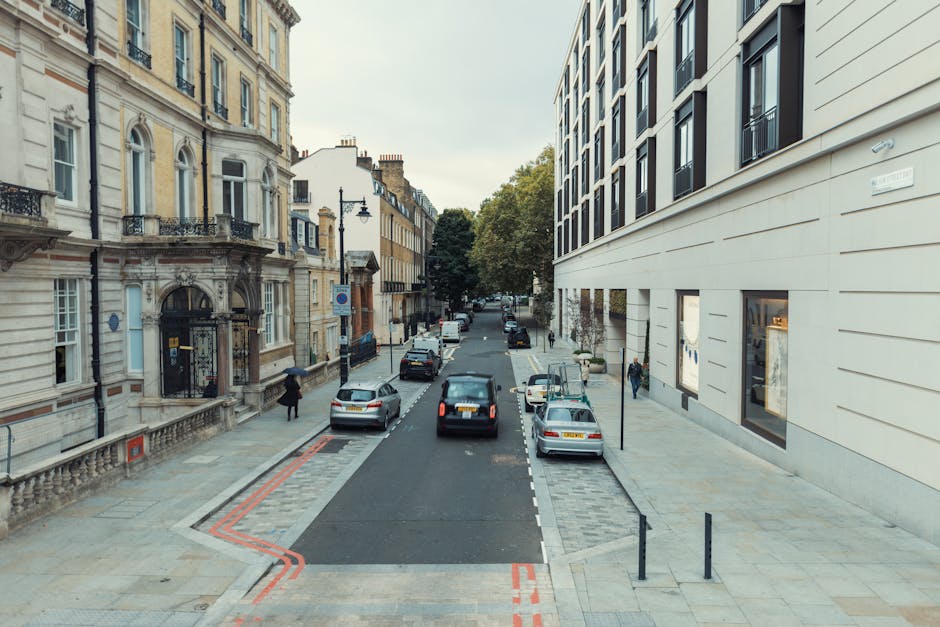
Parking tips for removals on High Holborn
Moving day on High Holborn can feel a bit like trying to park a shopping trolley in a narrow hallway: there's not much room for error, traffic can move fast, and one awkward stop can throw the whole plan off. That is exactly why parking tips for removals on High Holborn matter so much. Whether you are shifting a one-bed flat, an office, or a full family home, the difference between a smooth move and a stressful one is usually found in the first ten minutes at the kerb.
This guide breaks down how to plan parking, avoid common mistakes, choose the right vehicle position, and keep your move practical around one of central London's busiest stretches. You'll also find a checklist, a comparison table, and a real-world style example so you can make sensible decisions without overthinking every detail. Truth be told, a little parking planning saves a lot of elbow grease later.
Table of Contents
- Why Parking tips for removals on High Holborn Matters
- How Parking tips for removals on High Holborn Works
- Key Benefits and Practical Advantages
- Who This Is For and When It Makes Sense
- Step-by-Step Guidance
- Expert Tips for Better Results
- Common Mistakes to Avoid
- Tools, Resources and Recommendations
- Law, Compliance, Standards, or Best Practice
- Options, Methods, or Comparison Table
- Case Study or Real-World Example
- Practical Checklist
- Conclusion
- Frequently Asked Questions
Why Parking tips for removals on High Holborn Matters
High Holborn sits in a part of London where traffic, delivery activity, and pedestrian movement all compete for the same narrow slice of road space. For removals, that means parking is not just a convenience issue; it is a logistics issue. If your van is too far away, every box becomes a longer carry. If you block the wrong spot, you may attract complaints, delay the team, or force the vehicle to move mid-load. None of that is ideal when you're already trying to keep a move calm.
Parking also affects safety. A bad stopping position can create trip hazards, make lifting harder, and increase the chances of damage to furniture or walls. On a busy street like High Holborn, you also need to think about visibility for passing traffic and space for people to step in and out of the property without rushing. That sounds small, but in removals the small things stack up quickly.
In practical terms, the right parking approach helps you protect time, reduce lifting distances, and keep everyone on the same page. If you are arranging a wider move, it may also be worth looking at removals or man and van options, especially when the job is more about flexible access than large-scale transport. For larger projects, office removals and home moves can both benefit from proper access planning before the first item is loaded.
How Parking tips for removals on High Holborn Works
The basic idea is straightforward: you want the vehicle as close as possible to the entrance, with enough room to load safely and without causing unnecessary disruption. On High Holborn, that often means thinking in layers. First comes access. Then comes stopping position. Then comes the actual loading route from building to vehicle.
Most removals on busy central London roads rely on one of three approaches. You may have a pre-arranged loading bay, a short stay in a legal parking space, or a carefully timed stop where the van remains attended while the move is underway. Which one works best depends on the building, the time of day, nearby restrictions, and the size of the vehicle. No single method fits every move, and anyone who says otherwise is probably selling something.
It is also helpful to think about vehicle type. A smaller removal van or moving van can sometimes fit into tighter gaps more easily than a larger truck, which is one reason many customers choose a man with van service for central London work. For heavier or bulkier moves, removal truck hire may still be the right choice, but it needs more careful route and parking planning.
The point is not to overcomplicate it. It is to remove surprises. A move feels much smoother when everyone knows where the van will stop, how long it can stay there, and what the fallback option is if the first plan is blocked by traffic, a delivery, or-because London likes a bit of drama-an unexpected roadworks setup.
Key Benefits and Practical Advantages
Good parking planning is one of those unglamorous tasks that quietly improves almost everything else on moving day. You do not usually notice it when it goes well. You definitely notice it when it goes badly.
- Shorter carrying distance: the closer the van is to the entrance, the less time and effort each item takes.
- Lower damage risk: fewer steps and fewer turns mean fewer chances to chip furniture or scrape walls.
- Better time control: loading and unloading become more predictable when access is direct.
- Less stress for residents and neighbours: a tidy stop with clear intent tends to cause less friction.
- Safer manual handling: the team can focus on lifting well instead of rushing long carries.
There is also a financial angle, even if people do not always think of it that way. If the crew spends less time carrying items long distances, they can usually work more efficiently. That matters whether you are booking a full team through a removal company or choosing a more flexible removal service. Efficiency is not about cutting corners. It is about reducing the bits that slow everything down for no good reason.
For business moves, this can be especially important. Office furniture is often awkward, office blocks can have stricter access rules, and lift access may be shared. A good parking plan helps the whole day run with less noise and less disruption, which is exactly what you want when staff, clients, or building management are nearby.
Who This Is For and When It Makes Sense
These tips are useful for almost anyone moving on or near High Holborn, but they matter most if your property has limited access, your move needs to happen at a specific time, or you are handling bulky furniture. That includes renters leaving a flat, homeowners moving out of a central property, landlords coordinating tenant turnover, and businesses relocating between offices.
You will also find this especially helpful if you are:
- moving from a building with a narrow entrance or shared front steps
- using a van or truck that cannot sit across the street safely
- expecting traffic pressure during peak hours
- working to a strict building or tenancy time window
- trying to keep the move quiet and efficient in a busy area
If you are doing a smaller move, a man and van removals setup may be enough, especially if you only need a short, controlled stop. For more complex jobs, it may make sense to compare house removals with house movers or even a team handling packing and unpacking services. That way the parking plan fits the rest of the move instead of fighting it.
When is it not worth overplanning? If your move is tiny, the road is quiet, and you have direct access without any loading restrictions. Even then, though, it is still worth checking before the day. Parking in central London has a habit of changing its mind just when you feel settled.
Step-by-Step Guidance
Here is a practical way to approach removals parking on High Holborn without turning it into a full military operation.
- Check the property access first. Look at the entrance, the pavement width, steps, and whether there is room to manoeuvre furniture safely from door to vehicle.
- Identify the vehicle size early. A smaller van may fit better in limited spaces, while a larger truck may need a cleaner loading point and more room to operate.
- Review the likely stopping options. Think about legal parking, loading areas, or whether a brief attended stop is realistically possible.
- Time the move carefully. Busy road periods can create delays, so plan for the least congested window you can manage.
- Keep the unload route clear. Move bins, loose items, and anything that could become a trip hazard.
- Assign a spotter if needed. One person watching traffic and the vehicle position can save a lot of back-and-forth.
- Load the heaviest items first. This keeps the van balanced and makes better use of the available space.
- Have a backup plan. If your original stop is taken, know the next best option before you arrive.
A small but useful detail: if the move includes fragile pieces, send them last or keep them near the front of the van for quicker handling. Nobody wants to be hunting for a lamp base while traffic is stacking up behind the vehicle. Been there, not fun.
If you are still comparing service styles, the choice between removals van, moving truck, and a lighter man with a van approach often comes down to access. In tighter London streets, simpler can be smarter.
Expert Tips for Better Results
In our experience, the best parking outcomes come from careful details rather than big gestures. You do not need a perfect solution. You need a workable one that survives real traffic, real pedestrians, and the occasional late delivery driver.
Choose the shortest safe carry, not just the closest space
The closest space is not always the best one. If it forces awkward turns, blocks the pavement, or creates a dangerous lift angle, step back and choose the slightly less glamorous option. One extra minute walking is better than ten minutes untangling a bad position.
Keep doors and loading points aligned
Whenever possible, line up the van so the loading door faces the main access point. That reduces twisting, saves time, and makes it easier to place items efficiently. Small thing, huge difference.
Protect the first and last five minutes
The start and end of a move are when people are most likely to rush. That is where mistakes happen. Slow those moments down on purpose. Check the space, confirm the route, and make sure someone is aware of traffic flow before anything heavy comes out.
Bring basic moving aids
Moving straps, blankets, a trolley, and a couple of cones or warning markers can help make a parked vehicle more visible and the loading process safer. You do not need a warehouse full of kit. Just enough to make the job cleaner.
Speak to the building early
If you are moving from or into a managed property, ask about access expectations well before the day. A concierge, facilities team, or landlord contact may be able to tell you when deliveries are usually accepted, where loading is commonly done, and which areas are absolutely off limits.
For larger jobs, the same principle applies across the whole service. If you are booking a broader move through movers or a more structured removal company, the parking plan should be part of the quote discussion. It should not be an afterthought. That is where a lot of avoidable friction comes from.
Common Mistakes to Avoid
Most removals parking problems are not mysterious. They come from a handful of predictable mistakes.
- Assuming there will be space: central London is too busy for assumptions.
- Ignoring the time window: what works at 10 a.m. may fail badly at 8:30 a.m.
- Using the wrong vehicle size: a huge van may look efficient on paper but be awkward in real life.
- Not checking loading restrictions: a legal stop is not the same as a convenient one.
- Leaving the team to improvise: improvisation is fine for dinner, less so for parking outside a busy road.
- Blocking the pavement or entrance: even briefly, this can create complaints and safety issues.
A common one in practice is arriving with a full van and discovering the best spot is already taken. Then the whole day becomes a shuffle. The driver circles. Someone starts carrying boxes farther than planned. And suddenly the move is taking on a life of its own. That is the moment when planning would have earned its keep.
Another mistake is forgetting that parking impacts the people inside the property too. If everyone has to wait while the vehicle is moved, the move gets fragmented. Breaks the rhythm. A move has a rhythm, even if it doesn't sound glamorous to say it that way.
Tools, Resources and Recommendations
You do not need fancy software to manage removals parking, but a few practical tools help keep things tidy.
- Site notes: write down the exact entrance, loading point, and backup stopping option.
- Time plan: set an arrival window that gives room for traffic and unloading checks.
- Floor plan or room list: helps direct boxes quickly once the vehicle is parked.
- Contact list: keep phone numbers for the mover, building contact, and someone on-site.
- Protective moving materials: blankets, straps, and covers reduce handling stress.
If you are comparing services, look at removals near me to understand the wider service range, then narrow it based on access needs, vehicle size, and the amount of furniture involved. For a more hands-on move, man with van removal can be a practical middle ground between solo moving and a fully managed team.
It is also sensible to check the provider's information on insurance and safety and their health and safety policy if the move involves tight access or heavier items. Those pages won't park the van for you, obviously, but they do help you judge how seriously the company takes the moving process.
Law, Compliance, Standards, or Best Practice
Parking for removals in London generally needs to follow the usual road and loading rules that apply to the street in question, plus any building-specific requirements. Because restrictions can vary, the safest approach is always to verify the local conditions rather than relying on what worked somewhere else last month.
In plain English, this means you should treat parking as a compliance issue as well as a convenience issue. That includes checking whether stopping is permitted, whether a loading area is available, and whether the vehicle can stay attended throughout the loading period. If your move is in a managed building, the property may also have internal rules about deliveries, lift use, floor protection, and time slots. Those rules matter. A lot.
Best practice for removals on High Holborn is usually:
- confirm access before moving day
- use the smallest suitable vehicle where possible
- avoid blocking foot traffic or entrances
- keep loading efficient and supervised
- leave enough margin for delays, especially during busy periods
If the move is commercial, the bar is often higher. Businesses may need to coordinate with building management, protect shared spaces, and avoid disrupting clients or staff. In those cases, commercial moves and office relocation services can be worth considering because they typically require a more structured access plan.
One more point: if you are uncertain about a specific parking arrangement, ask before the day rather than hoping for the best. Hope is not a parking strategy.
Options, Methods, or Comparison Table
Here is a simple comparison of common parking approaches for removals on High Holborn. The best one depends on the size of the move, the building, and how much access you have.
| Approach | Best for | Advantages | Trade-offs |
|---|---|---|---|
| Pre-arranged loading point | Moves with building coordination | Most controlled, often fastest once ready | Requires planning and confirmation |
| Short legal stop | Smaller moves or quick loading | Simple and efficient when available | Limited time and space |
| Attended curbside stop | Flexible man and van jobs | Good for tight central London access | Needs active supervision |
| Larger vehicle with wider access | Bulky house or office moves | More capacity, fewer trips | Harder to place on busy streets |
As a general rule, smaller vehicles work better when access is tight, while larger vehicles are better when volume matters more than parking flexibility. The trick is matching the method to the street, not just to the amount of stuff.
Case Study or Real-World Example
Here is a simple real-world style example. A couple moving from a third-floor flat near High Holborn had a mix of furniture, boxes, and a few fragile items. They originally planned to use a larger vehicle because it felt more efficient. But once they checked the street access and building entrance, it became clear that a smaller van would be easier to position, easier to supervise, and less stressful for the loading team.
They also did one thing very well: they kept the route from the front door to the van clear. No loose bins. No extra bikes. No random clutter. That meant the carry was shorter, the loading rhythm stayed steady, and the day finished without that scrappy, slightly frantic feeling you sometimes get on London moves.
What changed the outcome was not extra muscle. It was the parking choice. The van was placed where it could be attended, the team knew where to move each item, and the move avoided unnecessary backtracking. Small adjustment, big payoff.
The same logic works for office moves too. If staff can move items from desk to vehicle without crossing awkward choke points, the whole process becomes quieter and quicker. That is one reason a well-planned office removals job can feel almost calm, even in a busy area. Almost.
Practical Checklist
Use this checklist before moving day. It is basic, but basic is good.
- Confirm the exact move address and entrance point
- Check whether a loading bay or legal stopping point is available
- Decide whether a van, removal van, or truck is the best fit
- Speak to building management if the property is controlled
- Plan the arrival window with traffic in mind
- Identify a backup stopping option
- Keep the access route clear of clutter
- Prepare blankets, straps, and protection for furniture
- Assign someone to watch the vehicle if needed
- Keep phone contact open between driver and mover
- Review insurance and safety details before the move
- Build in a small buffer for delay, because there is always a delay somewhere
If you want a slightly more managed experience, it may help to review about us for the company background and pricing and quotes so you can compare the service against your access needs. For a calmer move overall, there is a lot to be said for preparation done early.
Get a free quote today and see how much you can save.
Conclusion
Parking on High Holborn is not something to leave to chance. The street is busy, access can be tight, and even a small mistake can ripple through the rest of the day. But once you think through the stopping point, vehicle size, timing, and loading route, the whole move becomes much easier to handle.
The best removals parking plan is rarely the fanciest one. It is the one that is legal, sensible, and simple enough to work under pressure. That is the real goal: fewer surprises, fewer heavy carries, and a moving day that feels controlled rather than chaotic. And if you've ever tried to move house in London with everything happening at once, you'll know that calm is worth a lot.
Take your time with the plan, trust the practical details, and give yourself a little room to breathe. You do not need perfection. Just a decent plan, a steady hand, and a van parked where it should be.
Frequently Asked Questions
What is the best parking strategy for removals on High Holborn?
The best strategy is usually to park as close as legally and safely possible to the entrance, keep the vehicle attended, and minimise the carrying distance. Planning the backup option matters too.
Should I use a van or a truck for a move on High Holborn?
That depends on the size of the move and the access available. A van is often easier to place on busy central London streets, while a truck may suit larger loads if there is enough room.
Do I need to arrange parking in advance?
Yes, if you can. Advance planning reduces delays and helps avoid awkward last-minute decisions. For managed buildings, it is especially useful to confirm access early.
Is it better to move in the morning or later in the day?
It depends on traffic, building access, and local restrictions. Many people prefer a window that avoids the busiest traffic periods, but the right time is the one that fits your property and schedule.
What happens if the parking space is taken when the van arrives?
That is why a backup stopping point is so useful. A good mover will usually adapt quickly, but having a plan before the day saves time and stress.
Can a removal van stop outside a building for loading?
Sometimes, but only if the local stopping rules allow it and it can be done safely. The exact arrangement should always be checked in advance rather than assumed.
How do I reduce the carrying distance during a move?
Park as near as possible to the entrance, keep the route clear, and load items in a logical order. A shorter route is one of the simplest ways to make the day easier.
Are office moves harder to park for than home moves?
Often, yes. Office buildings may have stricter access rules, shared loading areas, or tighter time windows. That makes parking coordination more important.
Should I choose a man and van service for a High Holborn move?
If the move is small to medium and access is tight, a man and van setup can be a sensible choice. It is often more flexible than a larger vehicle in central London.
What should I ask a moving company about parking?
Ask where they prefer to stop, whether they have handled similar central London moves, what vehicle they recommend, and how they deal with blocked access. Straightforward questions, but useful ones.
Do insurance and safety really matter for parking?
Yes, because parking affects loading safety, damage risk, and how the team works around the vehicle. It is worth checking the provider's insurance and safety information before booking.
Where can I learn more about the company before booking?
You can review the service pages, the company background, and the practical information on pricing and move types. If you are still comparing options, start with removals and then narrow down from there.